
The 60-Days To Rearm Not For Peace
Why the Iran Ceasefire Is a Countdown, Not a Peace Deal

Big News today that a tentative ceasefire agreement was reached between Iran and the USA. To get caught up on the true nature of the broken oil market start with the Decoupled Series. Click here to see how oil markets changed during covid but you weren’t informed.
Here’s what’s happening today and moving forward.
Oil at $93 with a billion-barrel deficit, a reserve system hitting record drawdowns, and a reload window dressed as diplomacy. The market is pricing the announcement. We’re pricing what comes next.
The market moved up on ceasefire news while Iran was simultaneously firing ballistic missiles at Kuwait. U.S. Central Command confirmed the strike at 10:17 p.m. ET on May 27. Kuwaiti forces intercepted the missile. Kuwait’s Ministry of Foreign Affairs called it “a direct threat to the lives of civilians and vital facilities.” The IRGC acknowledged the attack through Iranian state media.
And Brent crude closed at $93.71.
Not because traders are stupid. Because they have been systematically trained, over three months of whipsaw headlines, to trade the presidential announcement feed and ignore the physical world underneath it.
These numbers look almost reasonable. They are not. They are the price you get when a market decides, collectively and repeatedly, that the story matters more than the inventory.
Today we are going to look at what the inventory actually says.
🛢️ I. The Price Lie
On Thursday, oil prices initially surged after the U.S. and Iran exchanged military strikes in the Strait. Then prices reversed lower after negotiators announced a 60-day memorandum of understanding to extend the ceasefire and open nuclear talks. Iran’s state television claimed Tehran had agreed to reopen the Strait to prewar traffic levels. The White House called it a “complete fabrication.” Trump said no nation will control Hormuz.
Amos Hochstein, former Biden senior energy advisor and now TWG Global managing partner, told CNBC’s Squawk Box the same morning that the framing of any deal is irrelevant to the physical reality on the ground: “No matter what happens, the Iranians will control the Strait of Hormuz for the foreseeable future. It doesn’t even matter what the deal says. Everybody in the region believes that.”
This is the market in one session. Rally on strikes. Drop on ceasefire. Both moves, in opposite directions, on the same day, from the same conflict, with the same underlying physical reality.
The physical reality has not changed.
🔥 II. What the Market Is Ignoring
Let’s stack the facts in sequence, because each one is more alarming than the last.
The IEA’s April 2026 Oil Market Report confirmed global oil supply plummeted by 10.1 million barrels per day in March, falling to 97 mb/d, driven by attacks on Middle Eastern energy infrastructure and the near-total halt of tanker traffic through the Strait of Hormuz. The agency called it the largest supply disruption in history. The May report revised total losses further: global supply fell an additional 1.8 mb/d in April to 95.1 mb/d, taking cumulative losses since February to 12.8 mb/d.
Before the war began, more than 20 mb/d of crude, natural gas liquids, and refined products transited the Strait monthly. By early April, the IEA confirmed loadings had collapsed to approximately 3.8 mb/d. That is less than 20 percent of pre-conflict flow. Alternative routes including pipelines on Saudi Arabia’s west coast and through the UAE port of Fujairah increased to 7.2 mb/d, up from less than 4 mb/d before the war. They cannot absorb the gap. There is no physical workaround at this scale.
The IEA’s May report confirmed what the CEOs of Saudi Aramco and Shell both stated on their Q1 earnings calls: cumulative supply losses from Gulf producers have already exceeded one billion barrels, with more than 14 mb/d of oil now shut in. Morgan Stanley forecasts the market will lose another billion barrels over the remainder of 2026 due to the time required to restart oilfields, repair refineries, and reposition the tanker fleet. The IEA projects global oil inventories to fall by an average of 8.5 mb/d during Q2 2026, the steepest draw since the Covid shock.
One important counterweight to acknowledge: the oil market entered 2026 with a surplus of approximately 2 mb/d, and global observed inventories were at their highest levels since February 2021 when the war began. OPEC+ has approved output quota increases to address the shortfall, and Atlantic Basin producers including the U.S., Brazil, Canada, and Venezuela have added 3.5 mb/d in exports since February. These buffers are real. They are also being overwhelmed. The surplus that cushioned the initial shock is gone. The IEA now classifies the market as “severely undersupplied” and projects it will remain in deficit through Q3.
The IEA coordinated an emergency release of 400 million barrels from member nation strategic reserves. As of May 8, according to S&P Global, 164 million barrels of that planned release had been deployed. The first round is more than 40 percent spent.
Physical crude briefly printed above $144 per barrel at the acute phase of the conflict. The IEA described the resulting physical-futures disconnect as “increasingly acute.” The price you see on your screen and the price someone actually pays to take delivery of a barrel were not the same thing.
This is the world behind the number on your screen.
⏳ III. The Reserve Trap
Here is the structural argument that separates this analysis from everything else published today.
The U.S. Strategic Petroleum Reserve ended calendar year 2025 at 411 million barrels, according to the Department of Energy’s own SPR Quick Facts page. Maximum authorized capacity is 714 million barrels. On inauguration day 2025, Trump promised to fill it “right to the top.” It never happened. The refill pace slowed by year end, and the war arrived before replenishment reached any meaningful level.
Then the war started, and the drawdowns accelerated in a way nobody on the refill side of the ledger had modeled.
In the week ended May 8, U.S. energy firms pulled a record 8.6 million barrels from the SPR in a single week, reducing total inventory to 384.1 million barrels, the lowest since October 2024, according to the EIA’s Weekly Petroleum Status Report. That topped the previous all-time weekly withdrawal record of 8.4 million barrels set in September 2022. The following week, Standard Chartered reported an even larger withdrawal of 9.9 million barrels, taking SPR volumes to 374 million barrels and, as StanChart put it, “quickly approaching operational stress limits.”
The U.S. committed to releasing 172 million barrels as its share of the IEA coordinated action, more than double the U.S. contribution to the 2022 Ukraine war response. The DOE awarded contracts for 45.2 million barrels in the first batch alone on March 20. The program is being executed much more rapidly than originally modeled.
Cushing, Oklahoma, the delivery hub where WTI futures contracts physically settle, sits at approximately 25 million barrels, uncomfortably close to the 20 million barrel operational floor below which pipeline systems struggle to function.
Now run the replenishment math.
To rebuild SPR levels toward anything resembling pre-war security, the U.S. must purchase tens of millions of barrels at $90 or above from a market still running an 8.5 mb/d inventory deficit. That repurchase pressure creates upward price momentum by itself. And the political cost of buying at $100 what was sold at $75 is a story that writes itself against whoever is in office when the bill comes due.
Rebuilding depleted global inventories, the IEA now estimates, could require an additional 1 mb/d of supply growth sustained for the next three years.
The emergency toolbox is not empty. It is running low, at a pace the market has not priced.
💣 IV. The 60-Day Fuse
This is the original thesis, and the sourcing now makes it harder to dismiss.
What does a 60-day memorandum of understanding actually buy each party at the table?
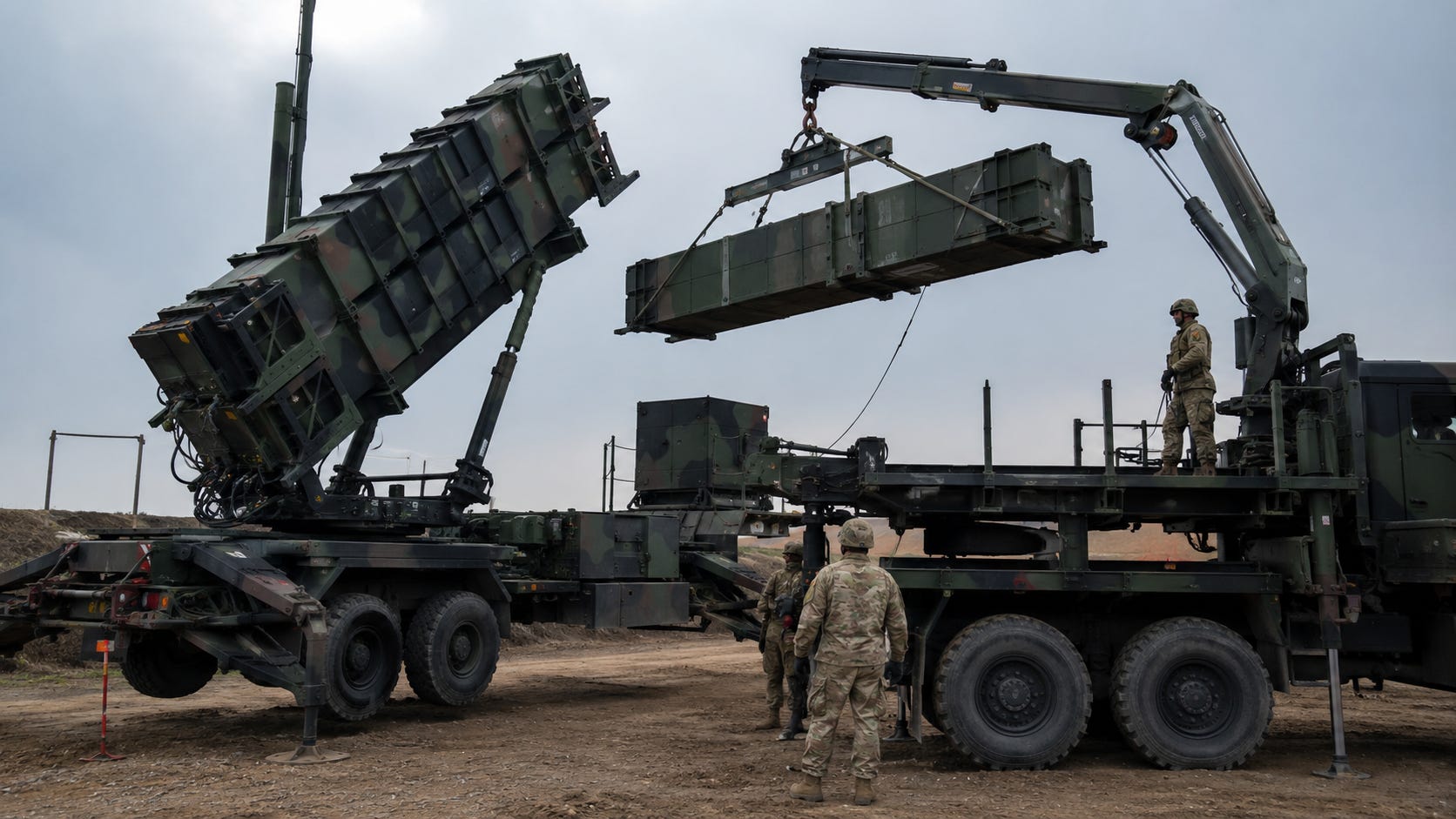
For the United States and Israel, it buys time to begin rebuilding interceptor stocks. The PAC-3 MSE interceptor, the backbone of Patriot air defense, carries a production lead time of 24 months for the missile and 30 months for the solid rocket motor, according to a May 2026 analysis published by the Foreign Policy Research Institute and independently confirmed by CSIS’s munitions inventory assessment. Boeing produces the active radar seeker for every PAC-3 MSE from a single facility in Huntsville, Alabama. The Pentagon signed a framework in April 2026 to triple that seeker production capacity, an admission that final assembly capacity is irrelevant if the sub-tier supply chain cannot keep up. CSIS’s analysis concludes that Patriot, THAAD, and Tomahawk inventories, heavily consumed in Operation Epic Fury, will take three or more years from today to return to prewar levels. The United States is trying to buy back an endurance that war revealed cannot be surged on command. Sixty days does not begin to close that gap. It merely starts the clock.
For Iran, the pause buys economic oxygen, time for Shahab missile and drone production recovery, and the ability to reposition without being seen as capitulating.
For Israel, it provides consolidation time along the Litani River line in Lebanon.
For Gulf states, it is 60 days of Strait revenue before the clock restarts.
For Wall Street, it is a headline to price as resolution rather than the pause it actually is.
Every party at the table needs the same thing right now. That is not peace. That is an armistice with a reload schedule built in.
The ballistic missile Iran fired at Kuwait on the night of May 27, confirmed by CENTCOM and acknowledged by the IRGC through Iranian state media, was not a breakdown in the process. It was Iran demonstrating it enters this pause from a position of capability, not capitulation. Kuwait’s Foreign Ministry called it an egregious ceasefire violation while simultaneously recognizing current peace efforts and noting the attack “undermined diplomacy.” Both statements are true at once. That is what coercive diplomacy looks like from the inside.
🎭 V. The Hochstein Paradox
This is where the Decoupled Markets thesis, the analytical framework developed across this series to describe oil markets operating as a presidential announcement prediction machine rather than a physical supply signal, stops being a financial observation and becomes a geopolitical feedback loop.
Hochstein, speaking on Squawk Box this morning, put it with uncommon directness:
“Wall Street wants the war to end, but the reason the war is not ending is because of Wall Street. Wall Street wants to believe what President Trump is saying is right, that we are on the precipice of a deal any second, which is why oil prices have dropped.”
Read that again carefully.
When oil prices drop because markets price in a deal that does not yet exist, the economic strangulation driving Iran toward the negotiating table loosens. The sanctions pressure eases. The pain that was moving Iranian decision-makers becomes less acute. The market pricing in peace makes peace structurally harder to achieve.
The price signal, already severed from physical supply fundamentals, is now feeding back into the geopolitical dynamics that determine supply. The loop closes on itself.
Citigroup added the macro layer in a note published Wednesday, warning that the prolonged crude run-up has spilled into second-round inflation effects, keeping central banks on alert and policymakers weighing tighter monetary settings. Which creates the second horn of the dilemma: high oil means rate hikes and recession pressure. Low oil means the physical reality eventually reasserts itself in a disorderly reprice. There is no comfortable middle. The financial system is caught between two bad outcomes, and the price signal it is generating is making both more probable.
🗺️ VI. The Scenario Map
Three branches. Here is where each one leads.
