
JFK: Too Big To Fail
PART 1 You Always Believed It Was a Conspiracy. The 2025 JFK Declassified Documents Prove You Were Right.

PART 1
The Real Cover-Up Was a Failed CIA Assassination Program So Far Out of Control It Could Never Be Exposed.
JFK: Too Big To Fail => PART 1 => PART 2 => PART 3 => Evidence Ledger => PART => PART5 => PART 6 => PART 7 => PART 8
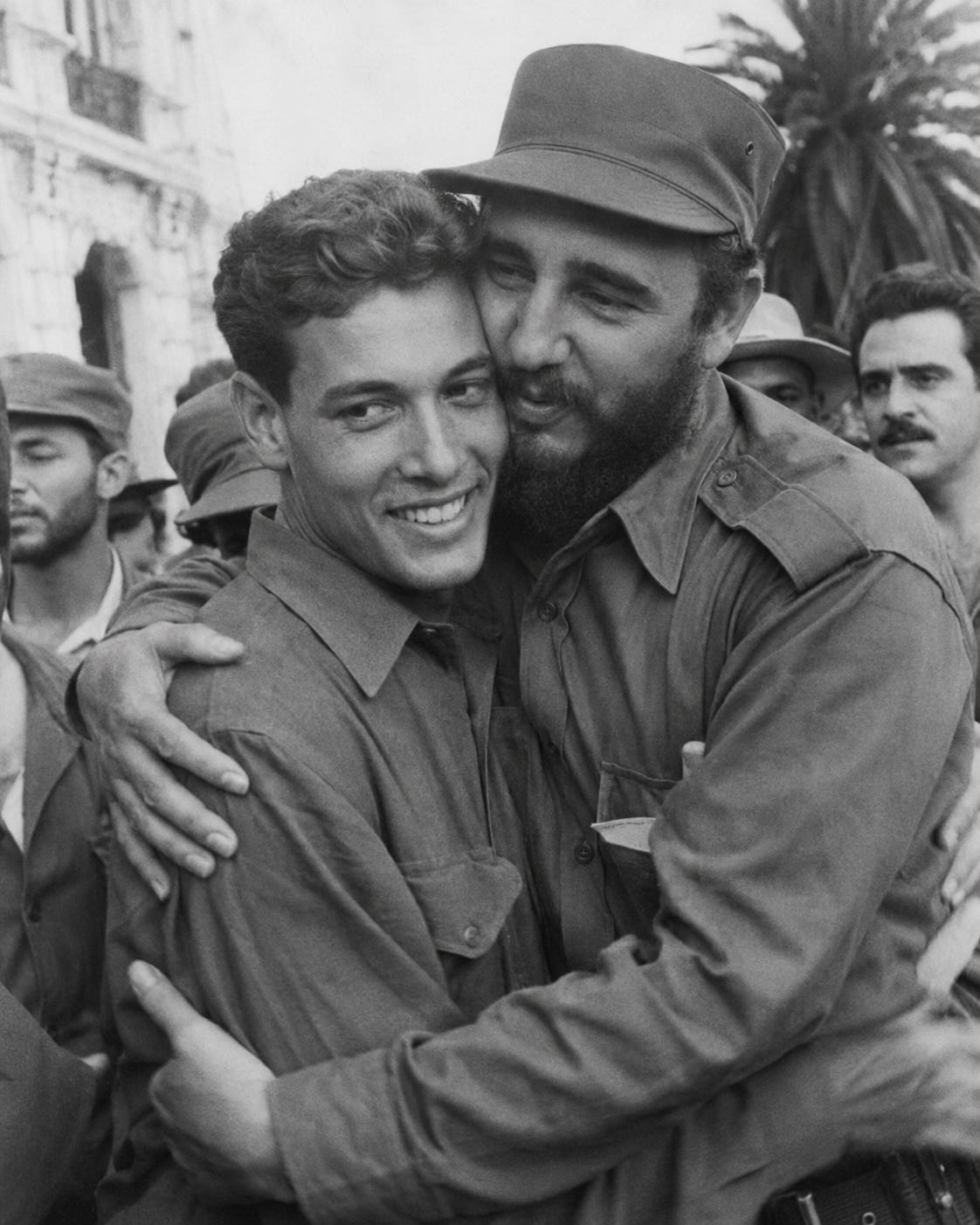
Fidel Castro and Rolando Cubela during the early revolutionary period. AI-generated
In March 2026, on a podcast hosted by former mob captain Michael Franzese, former CIA officer John Kiriakou said something that started spreading fast. He said a friend close to the Trump White House had told him that ten thousand JFK assassination documents would never be released, because every single one of them points directly at Israel. Within days, that claim had moved through Substack notes, Russian state media, and outlets that had never once covered the JFK case before. By the time it finished traveling, it had stopped being one man’s secondhand account of a private conversation and had become, to a lot of people, simply established fact.
One more fact belongs here, stated plainly because Kiriakou has stated it plainly himself. He has worked as a paid host for Sputnik, a Russian state-owned news outlet, since 2017, and has written publicly about that employment under his own name. That is not speculation about his motives and it is not an accusation. It is disclosed, on the record, by him. It is simply useful context for understanding why a claim like this one found such fast distribution through Russian state media specifically, rather than through some other channel. A claim does not need a coordinated campaign behind it to travel through a network. Sometimes it only needs to already be standing inside one.
Here is what actually happened, and nothing more than what actually happened. Kiriakou said a friend told him this. He did not say he had seen a document. He did not name the friend. No one has produced one of the ten thousand files in question, and no one outside that single private conversation has confirmed the number, the claim, or the country it allegedly names. That is the entire evidentiary basis for one of the most widely repeated JFK claims of the last year. One man, relaying what one other unnamed man told him, with nothing behind it that any outside party can check.
This series is not going to spend its time attacking John Kiriakou. He said what he said, and you can decide for yourself what to make of an unverified secondhand account passed along in a podcast interview. What this series is going to do instead is show you something more useful than an argument about one man’s claim. It is going to show you the actual documented chain of command behind the Castro assassination program, built entirely from sourced material, sitting right next to the kind of claim that travels with no sourcing at all, so you can see the difference for yourself in real time. There is a cost to even doing that. Repeating an unverified claim in order to teach people how to spot one still gives that claim one more airing than it had before. This series has decided the teaching is worth that cost, and would rather say so plainly than pretend the tradeoff doesn’t exist.
By the end of this four-part series, you will have a working method for telling a documented kernel from a fabricated leap, the same method Jefferson Morley has used for fifteen years of FOIA litigation to force real documents into the light instead of waiting for someone’s friend to describe them secondhand. Part Three is going to walk through exactly how a claim like this travels and why it is so durable. Part Four hands you the finished tool, an evidence ledger with every claim in this series tagged documented, contested, or inference, sourced enough that you never have to take any of it, including anything I tell you, on faith.
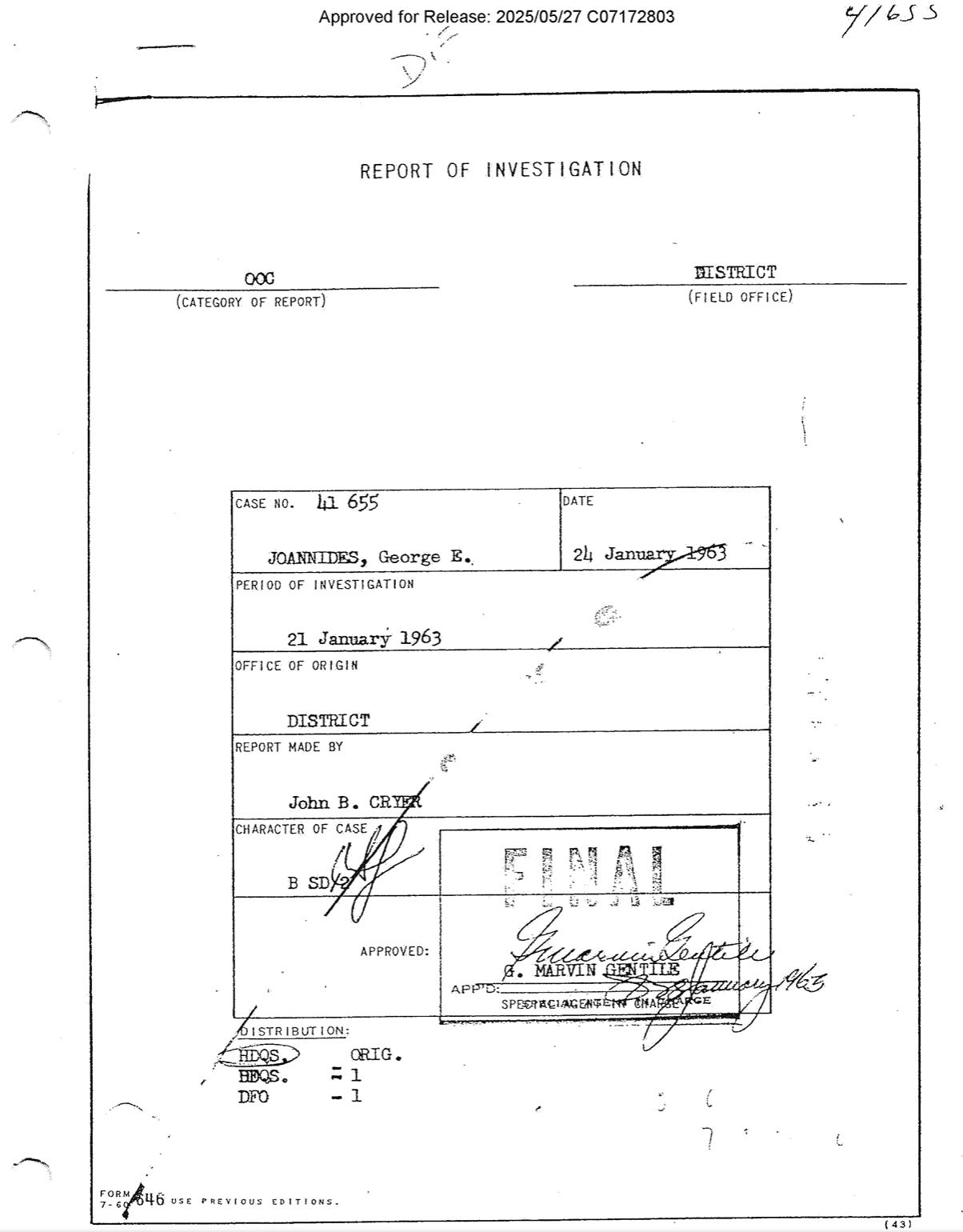
Archive link found below.
Today, you get the part that is actually documented. Five men, two lines of authority, one collapsing program. Here is what it actually shows.
Before this goes further, credit where it belongs. Jefferson Morley spent fifteen years in FOIA litigation forcing the CIA to release the Joannides personnel file, the document that proved a CIA officer had managed the Cuban exile group with direct contact to Oswald, then was recalled decades later to manage the very congressional investigation into that same connection. Nobody has done more rigorous primary source work on this specific thread than Morley, and nothing in this piece would be possible without the documents his litigation pried loose.
This piece does not compete with that work. It builds on top of it and asks a different question. Morley’s reporting establishes who knew what and when. This series asks why the system around them made it structurally impossible for anyone to find out in real time, and what that says about the thing every conspiracy theory has been straining to name for sixty years without quite getting there. Not a single mastermind. Not a foreign government. A program so large, so unaccountable, and so entangled with men who had their own convictions and their own exposure that the cover-up was never a decision anyone made. It was the only outcome the structure could produce.
Five men sit at the center of what follows. Over the next four weeks you are going to learn who each of them really was, what made them capable of building something this large, and what it cost them personally to keep it buried. Today you get the architecture. The deep dives come next.
🏛️ The Chain Nobody Voted On
Picture it as two lines, not one.
The vertical line is the chain of command. Four men, each one reporting to the next.

George Joannides ran his operation out of JM/WAVE, the CIA’s Miami station, the largest domestic CIA installation ever built. His job was psychological warfare and political action targeting the DRE, the Cuban exile student group that would have direct, documented contact with Lee Harvey Oswald three months before Dallas.

He was a CIA careerist from Greece who built his name in psychological operations before Miami ever needed him, and the bio you deserve on this man, the one that explains how he became the officer trusted to handle the asset closest to the assassin and then trusted again fifteen years later to manage the men investigating that very connection, is coming in a future installment. For now, hold this: Joannides retired from the Agency in 1971. He was recalled in 1978. Ask yourself why an agency with thousands of officers reached back for the one man who already knew exactly what not to find.
Joannides answered to Ted Shackley, the JM/WAVE station chief. Every operational report on DRE activity, every counterintelligence concern about the group’s security, every piece of information about who its members were talking to, passed through Shackley’s desk before it went anywhere else. Colleagues called him the Blond Ghost, because he hated being photographed and because his career moved like one, Berlin to Miami to Laos to Saigon, present at nearly every major covert flashpoint of the Cold War without ever quite leaving a fingerprint anyone could hold onto. What Shackley actually knew, and when, is one of the central questions Part Four’s evidence ledger has to answer in writing, not in inference. That ledger is still being built. It is being built specifically so a claim like “Shackley knew” never gets published without a citation behind it, the same standard this series is holding the Kiriakou claim to right now.
Shackley answered to Desmond FitzGerald, chief of the CIA’s Western Hemisphere Division and, simultaneously, the man running the AMLASH operation. FitzGerald was the same officer who flew to Paris to meet Cubela personally, who presented himself as Robert Kennedy’s representative without ever asking Robert Kennedy, and who, by his own later account, could not remember whether anyone had told him about the poison pen device at all. He came from old New York money, Harvard Law, a wartime career running guerrilla operations in Burma and later in Tibet, before Cuba ever became his problem. He died of a heart attack on a tennis court in 1967, three years before the Church Committee would have had the chance to ask him the questions this series is now asking in his place. What he knew and chose not to remember is a thread Part Two will pull on directly, because the same psychology that let a man forget a poison pen is the same psychology that let an entire government decide a nuclear-armed standoff ninety miles from Florida justified almost anything.
And running across the top of that chain, Richard Helms, FitzGerald’s boss, Deputy Director for Plans. Helms knew AMLASH was active on the day Kennedy was killed. He did not tell the Warren Commission. He would later admit under oath that his own 1966 denial of the Castro plots had been false. That is not an inference. That is his own sworn correction of his own sworn statement, on the record, and it sits at the top of this vertical chain like a key nobody else in the government was given a copy of. Notice the difference between what you just read about Helms and what you read about Kiriakou’s friend at the top of this piece. Helms’s contradiction comes from Helms, under oath, in the official record. Nothing in this paragraph asks you to trust an unnamed source relaying an unconfirmed number. That is the whole method this series runs on, and it is going to keep showing its work the same way every single time.
That is the vertical line. Joannides to Shackley to FitzGerald to Helms. Four men, one direct chain, each one answerable to the next.
The horizontal line is James Jesus Angleton, chief of CIA counterintelligence, and he does not sit above this chain. He sits across it. Angleton had no operational command over Joannides, Shackley, FitzGerald, or Helms. He could not give any of them an order. What he had instead was review authority that cut horizontally through every box on that vertical chart, because any operation touching a foreign asset of uncertain loyalty, or a returned defector under active suspicion, was supposed to pass in front of his desk before it went much further. Cubela was exactly that kind of asset, a Cuban official the CIA’s own people suspected might be reporting straight back to Castro. Oswald’s 201 file was exactly that kind of defector record, sitting open and under review the same August that Oswald walked into the DRE’s orbit in New Orleans. Note the word supposed. This series is going to hold that word to a documentary standard, not a narrative one, because the difference between “supposed to review” and “did review” is exactly the kind of gap that turns real history into manufactured theory if you are not careful. Angleton ran CIA counterintelligence for twenty-one straight years, longer than almost any other officer ever held a single post at that level, and what that kind of tenure does to a man’s judgment, his loyalties, and his blind spots is the entire subject of what comes next.
This is the structure that actually existed. A vertical chain of command and a horizontal line of review crossing through it at every level. Four men accountable to each other. One man accountable to a standard nobody above him was watching closely enough to enforce. There was no congressional committee asking why a station chief’s asset was crossing paths with a Soviet defector. There was no inspector general empowered to stop any of it before November 1963. There was only this shape, four men in a line and one man crossing through it, and what each of those five men actually was, where he came from, what he believed, and what he was willing to do about it, is the story this series is going to tell one installment at a time.
🪨 The Stone on the Hillside
James Jesus Angleton spent two decades building the CIA’s relationship with Israeli intelligence. That is documented in his own career record and in the institutional history of the CIA-Mossad liaison he personally established. What that relationship meant to the people on the other end of it is documented in a way that needs no inference at all. On December 4, 1987, seven months after Angleton died, the heads of Mossad and Shin Bet gathered in secret on a hillside above Jerusalem with five former heads of those agencies and three former military intelligence chiefs, to plant a tree and lay a memorial stone reading, “In memory of a dear friend, James (Jim) Angleton.” No American official received that ceremony. No other CIA officer in the history of the Agency has been honored that way by a foreign intelligence service. Whatever Angleton believed about Israel’s strategic importance, the people who ran Israeli intelligence believed he had earned that hillside.
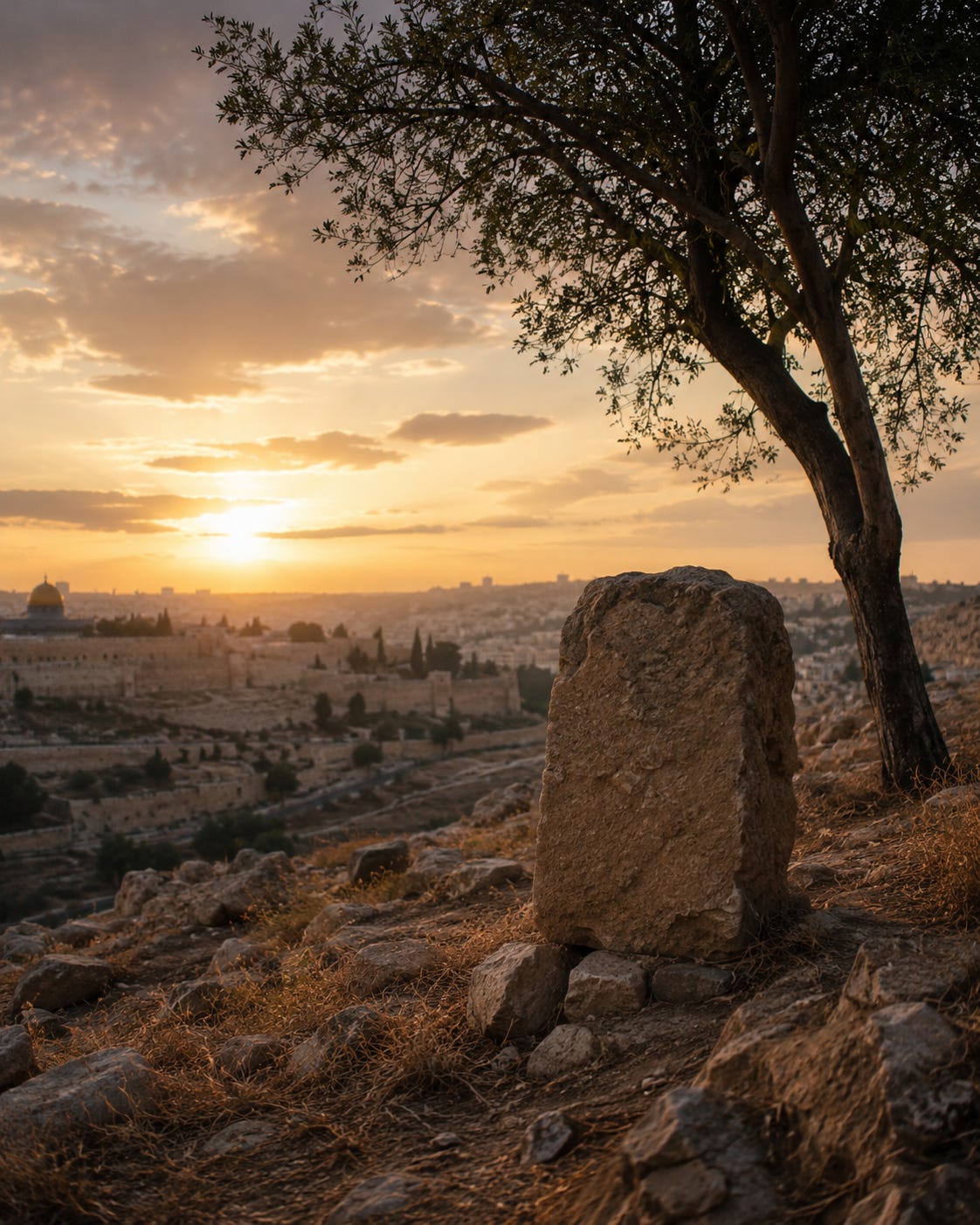
At the exact moment that relationship was at its deepest, John Kennedy was doing something no other American president had done before or has done since. He was directly pressuring Israel to halt its nuclear weapons program at Dimona, sending personal letters demanding inspection rights, treating Israeli nuclearization as a strategic problem rather than an ally’s prerogative. That pressure is documented in declassified State Department correspondence from 1963. Angleton sat at the center of the relationship that pressure was squeezing.
This is exactly the spot in the story where a claim like Kiriakou’s friend’s claim tries to make its move, and it is worth pausing on why. The Angleton-Israel relationship is real, documented, and dramatic. A hillside memorial is the kind of detail that makes a reader’s stomach drop. That is precisely the texture an unverified claim needs to attach itself to in order to travel. The ten thousand sealed files line works on people not because it comes with evidence, but because it lands on top of a true and genuinely unsettling fact and borrows that fact’s credibility for free. This series is going to keep doing the opposite. It is going to tell you what is documented about Angleton and Israel, and then it is going to tell you, in the very next paragraph, exactly where the documentation stops.
Here is where it stops. Angleton did not need to conspire with anyone for that relationship to matter. He needed only to be human, and humans in positions of unchecked authority let conviction do quiet work that no memo ever records. But whether that quiet work actually touched a specific sign-off on a specific operation is a question the surviving record cannot currently answer, because the files that would show it were either never written down or were destroyed in the purges Helms ordered after the 1967 Inspector General Report. That absence of a document is not proof either way. It is the gap Part Two’s deep dive on Angleton has to confront directly, by name, rather than letting a hillside memorial, or a podcast anecdote, do the arguing for it.
None of this is a claim about Israel as a nation, about Israeli intelligence as an institution, or about Jewish people as a group. It is a claim about one man, and possibly the men around him, and the series owes you a full accounting of who those men actually were before it asks you to draw any conclusion about what they did. Other CIA officers in Angleton’s exact position, reviewing the same operations, might have made entirely different judgments, because conviction is not job description. The same is true on the other side of the relationship. Institutions are not monoliths. They are staffed by individuals whose personal convictions shape outcomes in ways a different person in the same chair would not have produced.
⚠️ The Inquiry That May Have Spooked Everyone Who Mattered
There is a specific moment that deserves more attention than it has received, because it sits at the precise intersection of institutional fear and personal exposure.
Robert Kennedy did not stay quiet after his brother’s death because he lacked curiosity. He pressed DCI John McCone directly about Agency involvement in the days after Dallas. He was the Attorney General. He had prosecuted organized crime as his life’s work. He had been briefed, however incompletely, on the CIA-Mafia plots against Castro two years earlier. He knew enough to know that the right question, asked the right way, could unravel a program that Angleton, FitzGerald, and Shackley had spent three years building, expanding, and protecting from outside scrutiny.
Consider what RFK’s inquiry meant from the perspective of the men actually running the program. The Attorney General of the United States, the brother of the murdered president, was asking pointed questions about CIA operations against Castro at the exact moment the AMLASH track, the same program that had a CIA officer handing a poison pen to a Cuban asset on the day of the assassination, was still active and still entirely unauthorized by anyone above the operational level. For FitzGerald, who had personally invoked RFK’s name to Cubela in Paris without ever asking him, a real investigation meant explaining why he had done that. For Shackley, it meant explaining what his Miami station actually knew about Joannides’s asset’s contact with the man who would be blamed for the assassination. For Angleton, it meant explaining why a returned Soviet defector’s file had sat on his desk for months without producing a single counterintelligence flag connecting it to anything.
RFK’s inquiry did not need to be a deliberate threat to be terrifying to the men who received it. It only needed to be a serious question asked by someone with the legal authority to keep asking it. The documented response was not transparency. It was silence, sustained for years, eventually hardened into a wall of withheld files, recalled officers managing their own investigators, and an Inspector General’s report that took until 1967 to even attempt an accounting, and was itself withheld from the Warren Commission. RFK pressed. The men with the most to lose went quiet. That sequence, pressure followed by institutional silence, is the most documented pattern in this entire story, and it is the pattern this series has been building toward from its very first page.
💀 The Night the Pen Was Built
On the night of November 20, 1963, a CIA technician named Dr. Gunn was told the device had to be ready by noon the next day. He went straight to the FI/D workshop and stayed through the night. Those who worked with him in the lab knew what he was building. They did not know who it was for.
It took seven or eight failed attempts before he succeeded in converting a Paper Mate pen into a hypodermic syringe that actually worked. He said the needle was so fine the victim would barely feel it going in, no more than the scratch of a shirt with too much starch. He delivered the finished device the following morning and kept two of the earlier prototypes. He still has them in his safe.
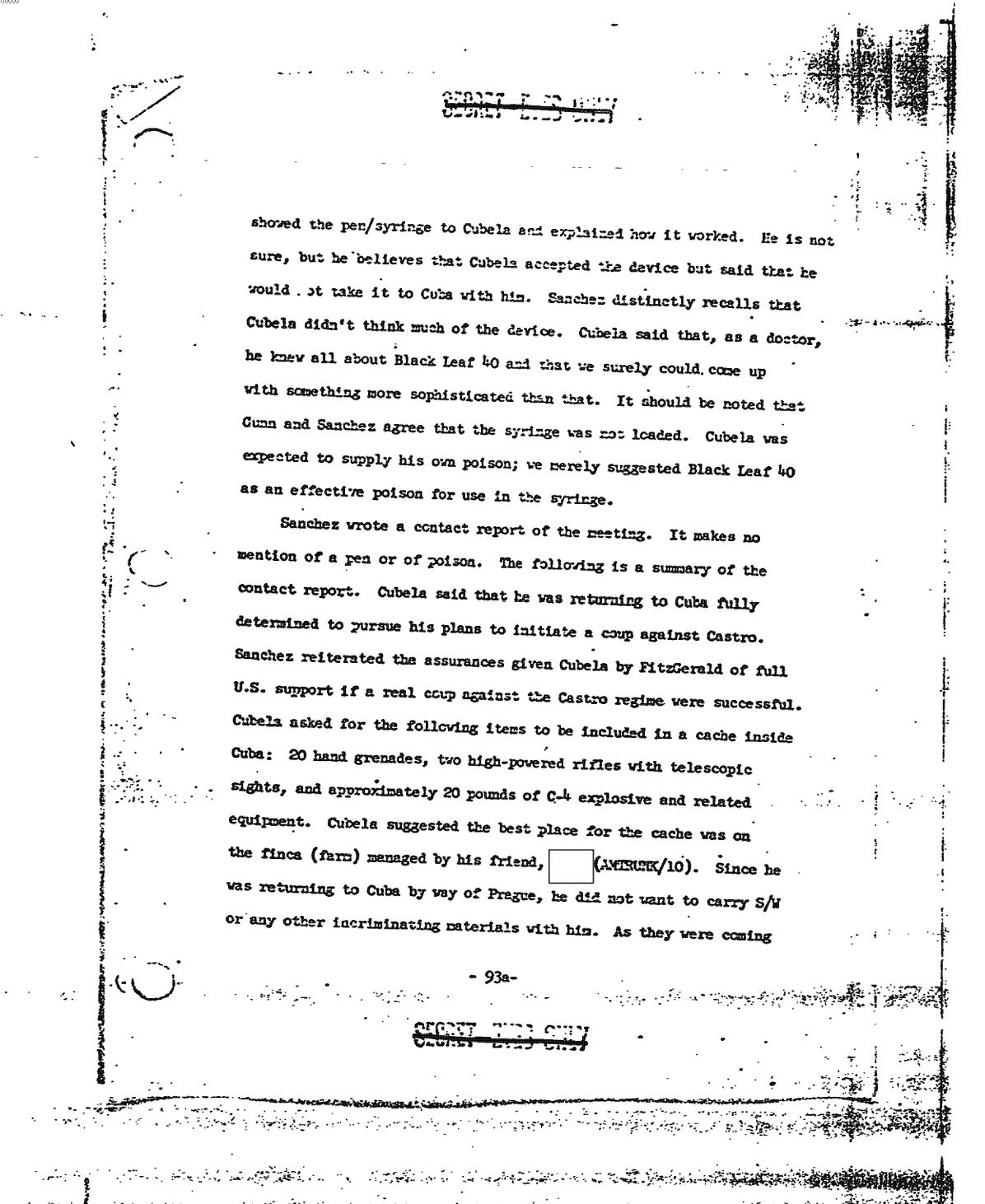
That same morning, a CIA officer named Nestor Sanchez boarded a flight to Paris. He landed and met with a man the Agency called AMLASH late in the afternoon. The man’s real name was Rolando Cubela, a senior Cuban official with direct access to Fidel Castro, and for three years the CIA’s most promising hope for ending Castro’s life from the inside.
Sanchez showed Cubela the pen and explained how it worked. What happened next is a detail no version of this story has ever fully reckoned with. Cubela, who was a trained physician, looked at the device the CIA had spent a full night perfecting and was not impressed. Sanchez later recalled, on the record, that Cubela “didn’t think much of the device.” He accepted the pen but told Sanchez he would not be taking it back to Cuba with him, and according to Sanchez, returned to Cuba fully determined to pursue his own plan for a coup against Castro regardless.
CLICK TO VISIT USA GOVERNMENT ARCHIVE FILE
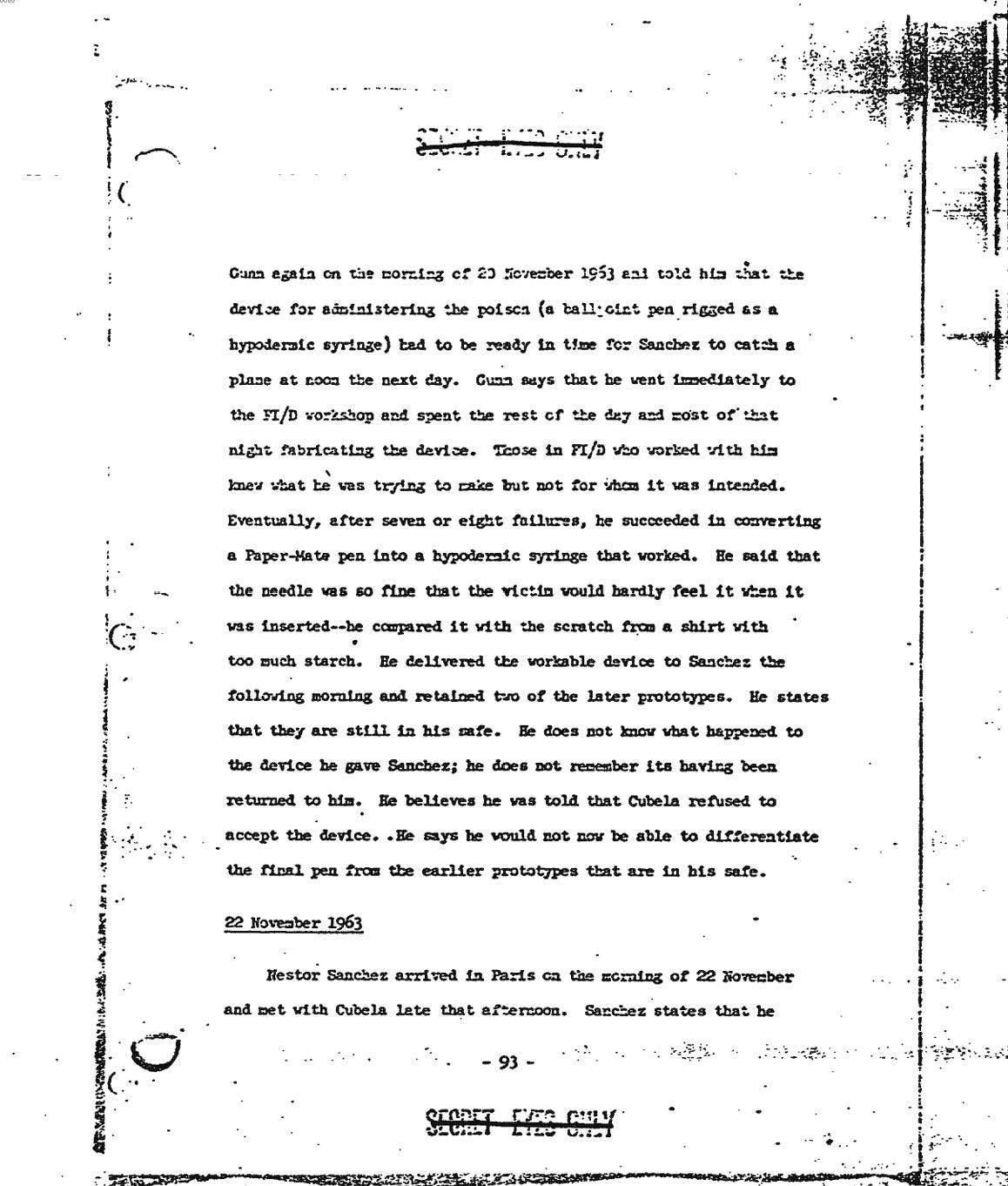
The syringe was never even loaded with poison. Cubela was expected to supply his own. The most secretive intelligence agency in the world had spent a night of failed prototypes building a murder weapon that its own intended user wasn’t impressed by, by his own case officer’s account.
CLICK TO VISIT USA GOVERNMENT ARCHIVE FILE
Then, as the meeting was ending, Sanchez and Cubela learned the news from Dallas. No president authorized that meeting. No congressional committee had ever voted on the program that produced it. No budget line had ever named it. Sanchez knew the whole story. Halpern knew much of it. Gunn knew much of it. FitzGerald, the man running the operation, did not mention this part of it when he first briefed his own colleagues, and when pressed later said he remembered something about the poison but nothing about a device to deliver it. Exactly how many people inside the Agency knew the device existed at all is not a number this series is going to print until it has a citation attached to it. It is precisely the kind of specific, dramatic figure that is easy to repeat and hard to verify, and that is not a standard this series is going to apply to other people’s claims and skip for its own.
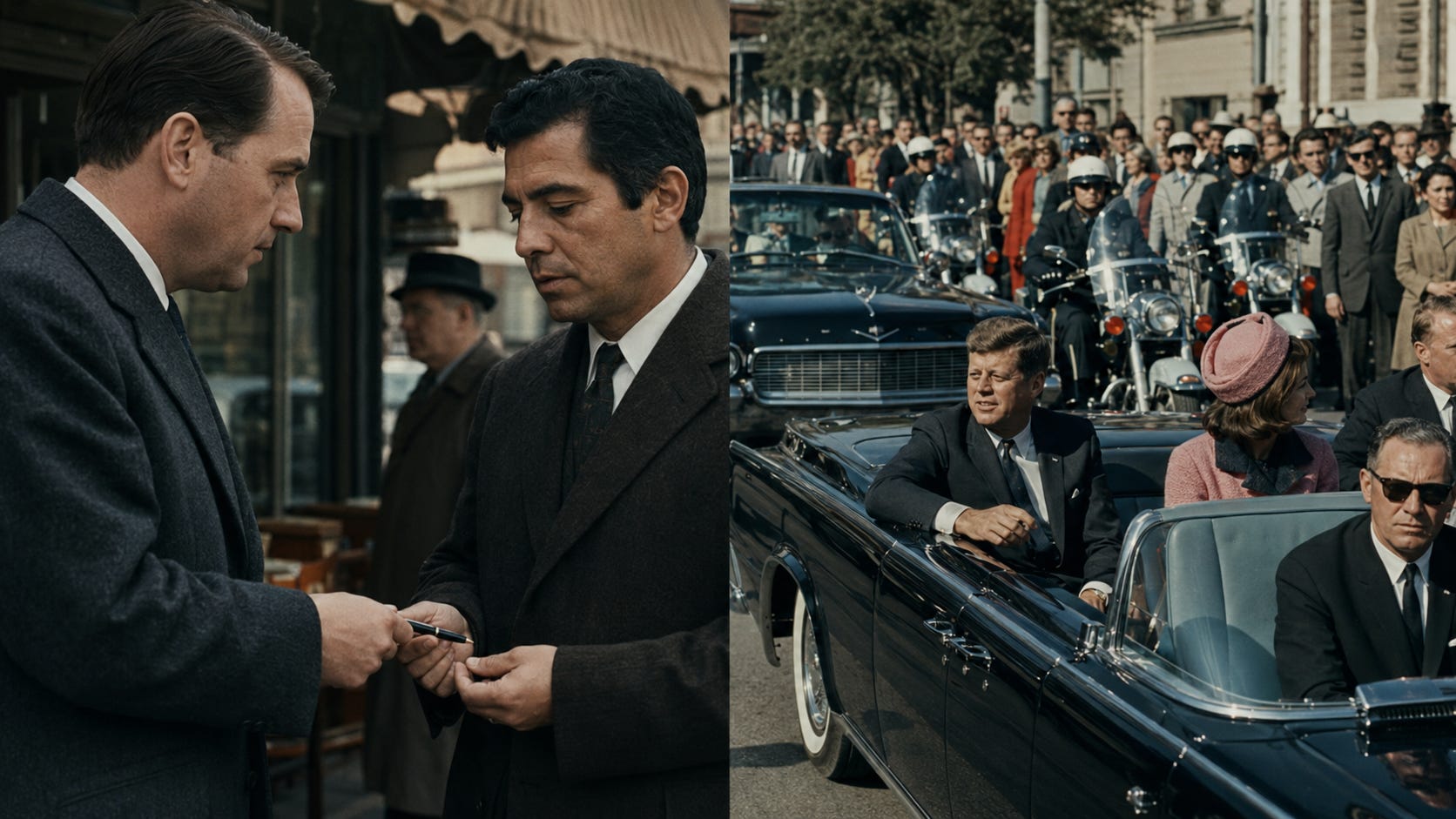
That is not a chain of command. That is a program so far outside anyone’s control that even its own director could not keep track of what his own people had built.
Here is what fifty million dollars a year with no congressional oversight, no judicial review, no inspector general with real authority, and no elected official who could ask a single question in public actually produces. It produces a program employing 2,500 people across Miami safe houses, European hotel rooms, Mafia social clubs, and Cuban exile training camps. It produces poison pill contracts with Sam Giancana, Santo Trafficante, and Johnny Roselli, men the FBI was simultaneously trying to prosecute for organized crime. It produces eight documented assassination attempts, a shadow army of Cuban exiles who believed they had a permanent American patron, and a paper trail so explosive that every senior official who touched it spent the rest of his career making sure no one ever read it. By November 1963 the Castro kill program had not just failed to remove Fidel Castro. It had created an entirely separate problem. Too many people knew too much about too many illegal things, and a public investigation of the Kennedy assassination threatened to unravel every last thread at once. The cover-up was not the work of masterminds protecting a conspiracy. It was the panicked institutional reflex of men who had spent three years building something that could never survive daylight, suddenly staring at the brightest spotlight in American history bearing down on everything they had done.
How that fear got built into the budget in the first place is where this series goes next. Why fifty million dollars a year with no oversight felt necessary rather than reckless to the men approving it is not a mystery you can solve by reading about Cuba. It is a mystery you solve by going back further, to a generation of Americans crouched under classroom desks, and a President who was privately told the odds of nuclear war during the missile crisis were one in three. That is Part Two.
What the 2025 documents show next is the part that changes everything you thought you knew about who was watching, who knew, and who made sure nobody ever found out.
This is where the paid section begins. If you have been following this series, you already know it is worth it.
